
Dr. USP Explains
Big ideas.A clearer picture.
Explore psychology, communication, research and Indian philosophy through illustrated explainers. Start with a poster. Follow the idea further.
Dr. Uma Shankar Pandey · profusp.com
Find an idea.
Stay with the question.
Choose a topic, open the full poster and unfold the study notes. Each guide includes a question to think through and a route to further reading. Use the collection for revision, classroom discussion or your own exploration.
Showing 19 of 19 visual guides
No guides match this search. Try a shorter term or clear the filters.
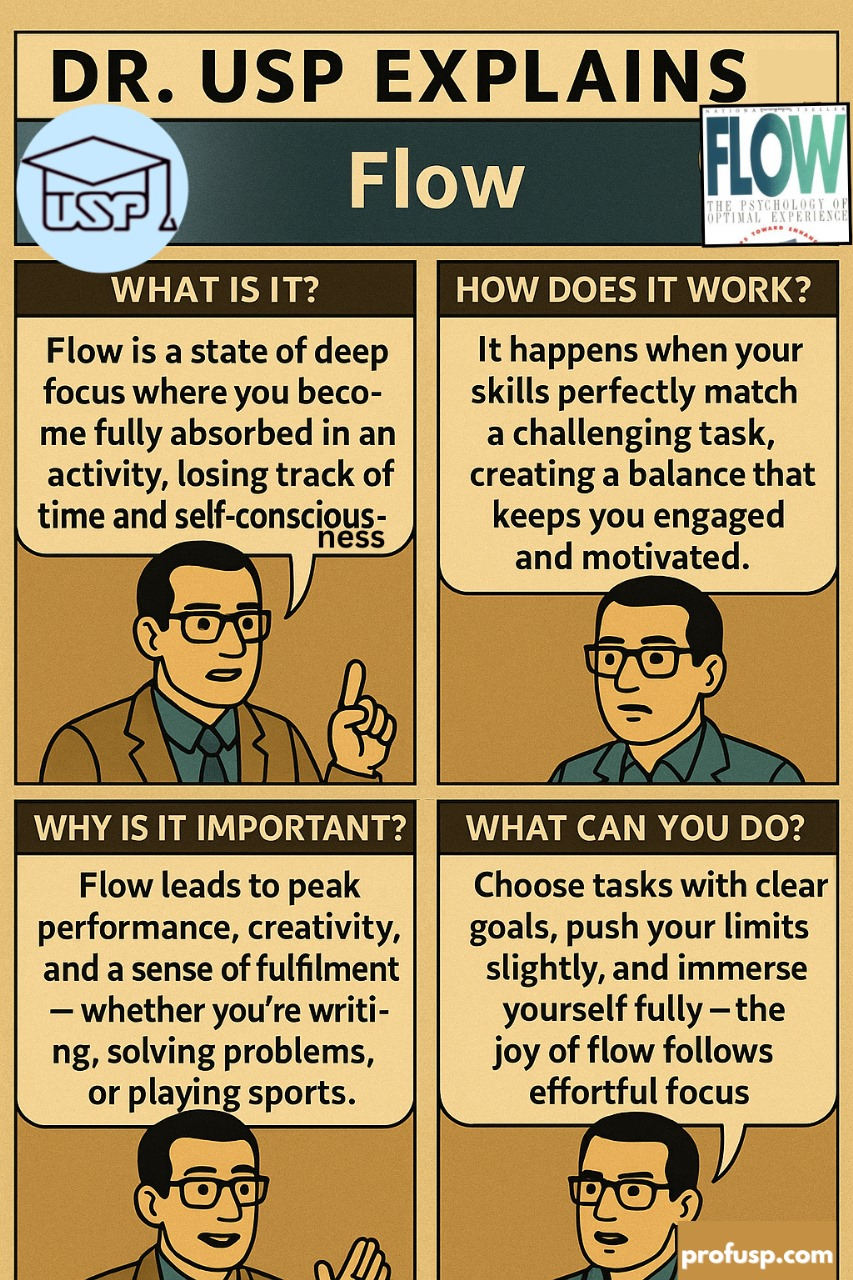
Flow
How deep absorption draws attention into the task in front of us.
Read the study notes
- Flow describes absorbed engagement, often accompanied by a changed sense of time and reduced self-consciousness.
- A demanding task matched to perceived skill, clear goals and useful feedback can support the experience.
- For study, define one manageable goal, remove avoidable distractions and check your progress.
Reading note. A balance of skill and challenge supports flow; it does not guarantee the experience or peak performance.
Think about it. When did a task last hold your attention so fully that you lost track of time?
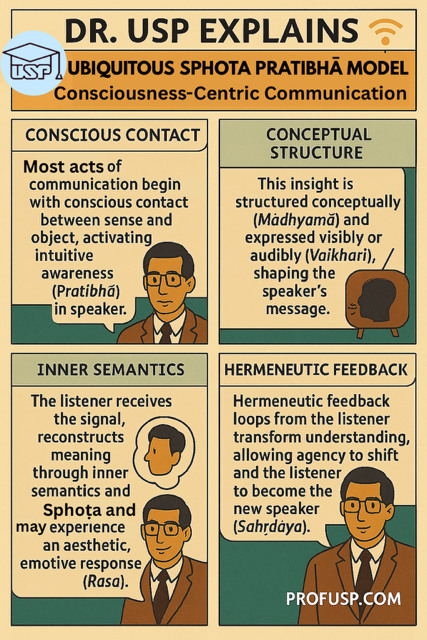
The USP Model
A visual starting point for consciousness centred communication and meaning formation.
Read the study notes
- The Ubiquitous Sphoṭa–Pratibhā model examines how an expression becomes meaningful to a situated participant.
- The revised account treats Sphoṭa and Pratibhā as two aspects of a meaning episode: the linguistic whole and its apprehended import.
- Reflection and communication can return to reshape interpretation, judgment and action.
Reading note. This poster is an earlier visual overview. Use the revised October 2026 model and Version 2 preprint for the current formulation.
Think about it. How does understanding a message change what you say or do next?
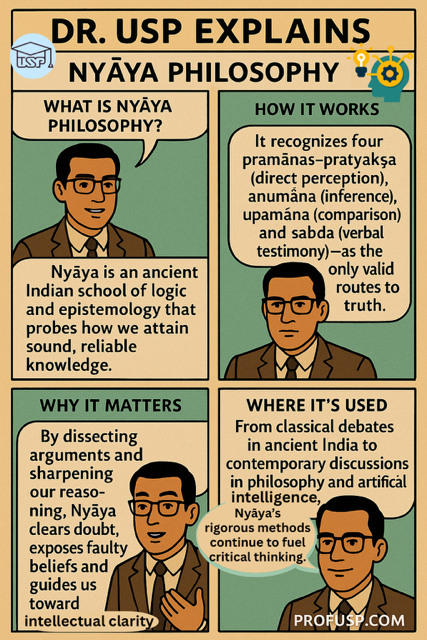
Nyāya Philosophy
Examine how perception, inference, comparison and testimony support knowledge.
Read the study notes
- Nyāya develops systematic accounts of knowledge, inference, argument and error.
- Its four recognised knowledge sources are perception, inference, comparison and verbal testimony.
- Ask what supports a claim, whether the reason holds, and which conditions could defeat the conclusion.
Think about it. What evidence would make you revise a strongly held conclusion?
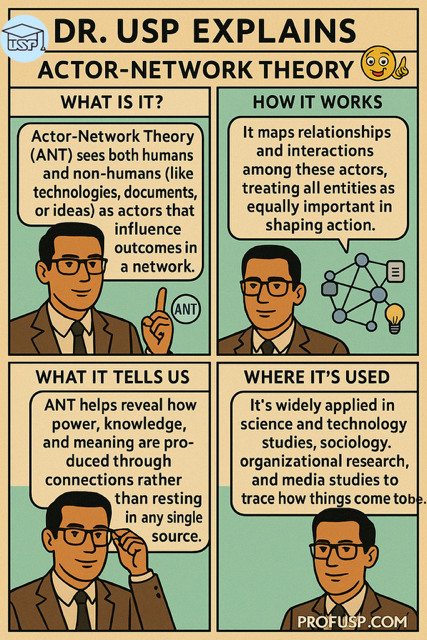
Actor–Network Theory
Trace how people, technologies, documents and institutions participate in action.
Read the study notes
- Actor–Network Theory follows associations through which actions and outcomes take shape.
- A newsroom story, for example, depends on reporters, sources, software, deadlines, documents and publishing systems.
- Follow these connections to see how authority and influence are assembled and maintained.
Reading note. Analytical symmetry means taking human and non-human contributions seriously. Their influence need not be equal.
Think about it. Which overlooked technology or document shapes how your classroom or workplace operates?
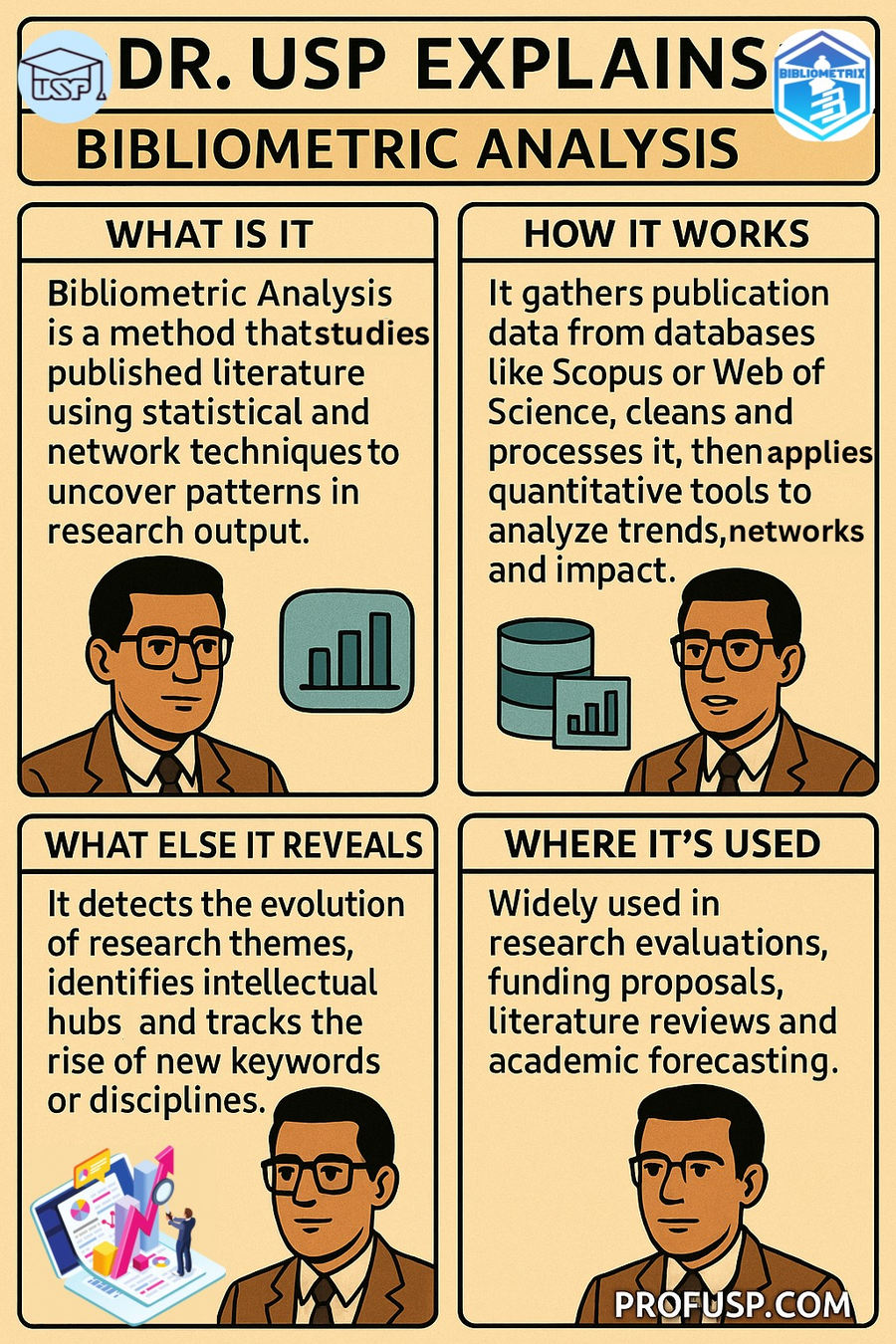
Bibliometric Analysis
Map patterns in publications, citations, authorship and research themes.
Read the study notes
- Define the research question, database, search strategy and time span before collecting publication records.
- Clean the records, resolve duplicates and inspect citation, co-authorship or keyword networks.
- Interpret patterns alongside coverage, language, disciplinary and citation-window limits.
Reading note. Citation counts describe particular forms of attention; they do not directly measure the quality of every work.
Think about it. Would a different database change the research field your map makes visible?
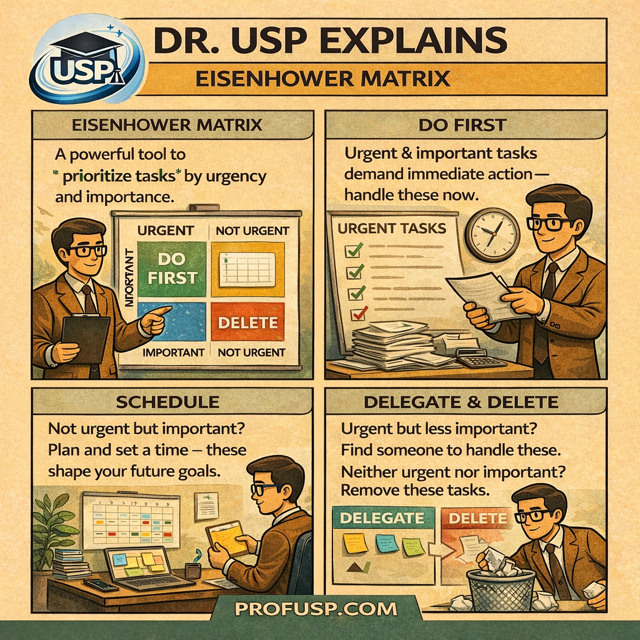
Eisenhower Matrix
Separate urgent demands from the work that matters over time.
Read the study notes
- Sort tasks by urgency and importance: do, schedule, delegate or remove.
- Protect time for important work before repeated interruptions turn it into an emergency.
- Use delegation where responsibility and available support permit it; revisit priorities as circumstances change.
Reading note. The matrix is a planning aid. Urgency, importance and delegation depend on your role and circumstances.
Think about it. Which important task keeps slipping because it has no immediate deadline?
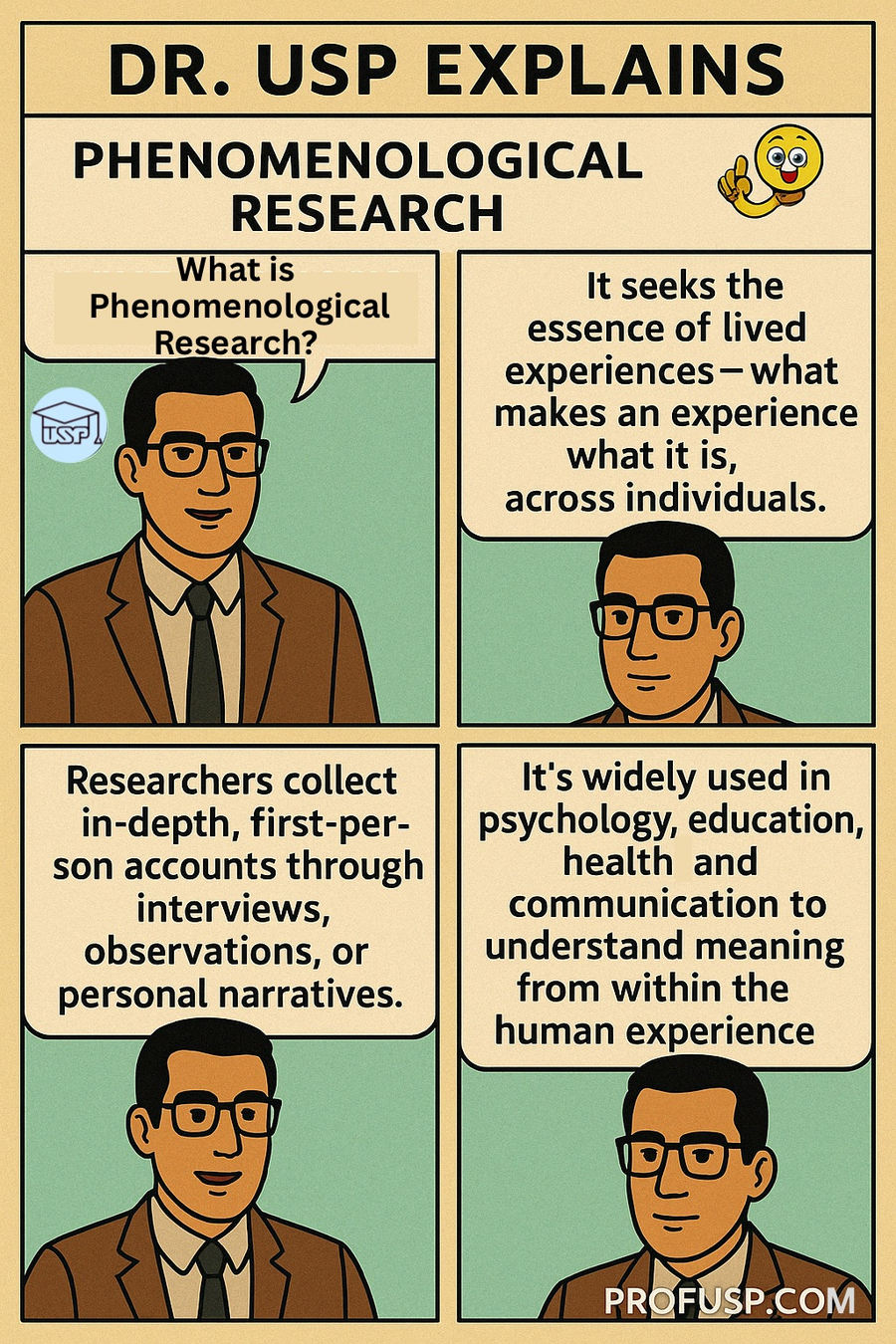
Phenomenological Research
Study how people experience a phenomenon and give it meaning.
Read the study notes
- Begin with a question about lived experience and choose participants who have experienced the phenomenon.
- Gather rich first-person accounts, often through in-depth interviews, and examine meaning with care.
- State your philosophical approach and reflect on how your own assumptions shape the inquiry.
Reading note. Descriptive and interpretive approaches differ. Claims about a shared essence depend on the chosen tradition.
Think about it. How would you ask someone to describe an experience before offering your own explanation?
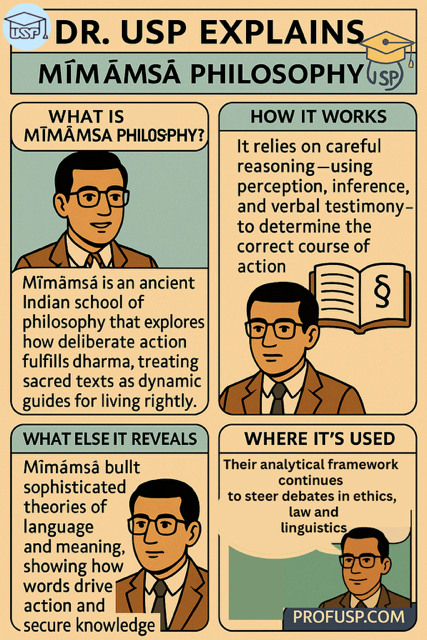
Mīmāṃsā Philosophy
Explore interpretation, language, Vedic injunctions and the grounds of action.
Read the study notes
- Mīmāṃsā investigates dharma through the interpretation of Vedic texts, with close attention to injunctions and ritual action.
- Its thinkers developed influential accounts of sentence meaning, testimony and the validity of cognition.
- Read a statement in relation to its wording, context, purpose and relation to other passages.
Reading note. Mīmāṃsā schools differ in the knowledge sources they accept; the poster lists examples, not a complete shared list.
Think about it. How can a change in context alter what an instruction requires someone to do?
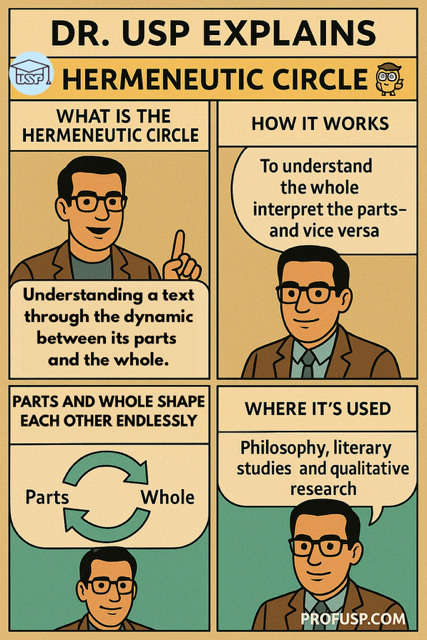
The Hermeneutic Circle
Move between a passage and its wider setting to deepen interpretation.
Read the study notes
- An interpretation of the whole guides how we read its parts; particular passages can then reshape the whole.
- This movement also brings our prior understanding into contact with the text and its context.
- In qualitative analysis, revisit a quotation alongside the interview, situation and emerging interpretation.
Think about it. Which detail in a text has ever changed your understanding of the whole?
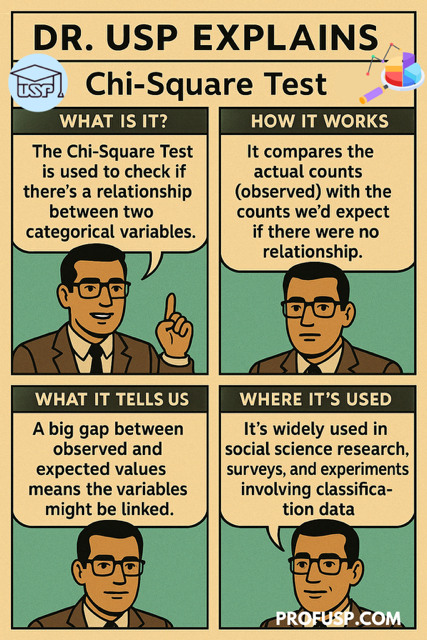
Chi-Square Test
Compare observed and expected counts when studying categorical variables.
Read the study notes
- The test of independence asks whether two categorical variables are associated in a contingency table.
- Compare observed counts with the counts expected under independence; check the test assumptions.
- Report the test statistic, degrees of freedom, p value and an appropriate effect size.
Reading note. A large discrepancy needs statistical evaluation. Consider sample size, expected cell counts and effect size before drawing conclusions.
Think about it. What would an association between two categories tell you—and which further questions would remain?
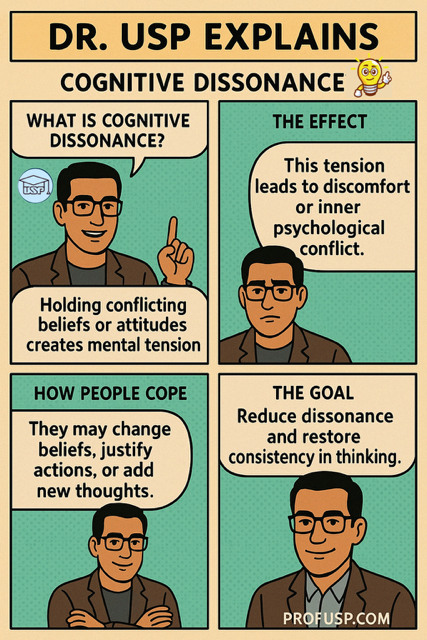
Cognitive Dissonance
Understand the discomfort that can arise when beliefs and actions conflict.
Read the study notes
- Cognitive dissonance concerns a psychologically uncomfortable inconsistency among relevant cognitions.
- People may reduce it by changing behaviour, revising beliefs, adding justifications or reducing the importance of the conflict.
- Notice how a convenient explanation can protect a decision from further scrutiny.
Think about it. After a disappointing purchase, do you re-evaluate the product or defend the choice?
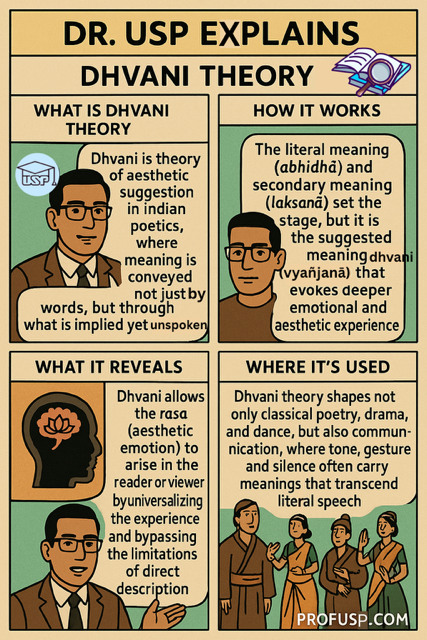
Dhvani Theory
Read the suggested meanings that give an expression its aesthetic force.
Read the study notes
- In Indian poetics, dhvani concerns suggestion: an expression can carry significance beyond its direct denotation.
- Abhidhā, lakṣaṇā and vyañjanā help distinguish denotation, secondary indication and suggestion.
- Attend to context, imagery, tone and the reader’s participation when exploring suggested meaning.
Reading note. Suggestion is interpreted within a context; it does not licence any meaning a reader happens to imagine.
Think about it. Which line of poetry suggests more than its literal wording states?
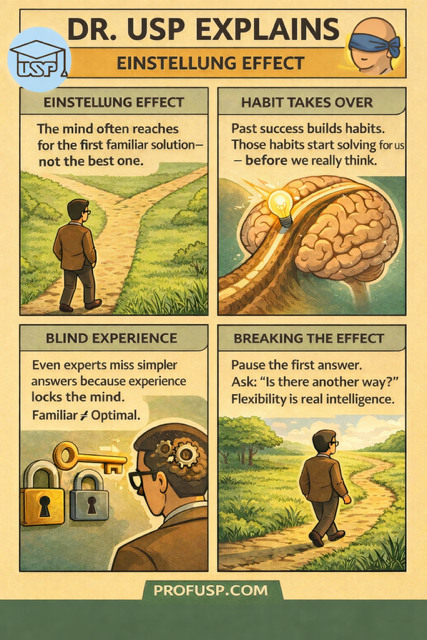
The Einstellung Effect
See how a familiar solution can obstruct a better one.
Read the study notes
- Prior success can make a familiar procedure the first answer that comes to mind.
- That mental set may narrow the search even when a simpler or more suitable solution is available.
- Pause, restate the problem and deliberately test another approach before committing.
Reading note. Expertise can help solve problems and can also produce mental sets. The effect depends on the problem and context.
Think about it. Which routine do you keep using because it worked before?
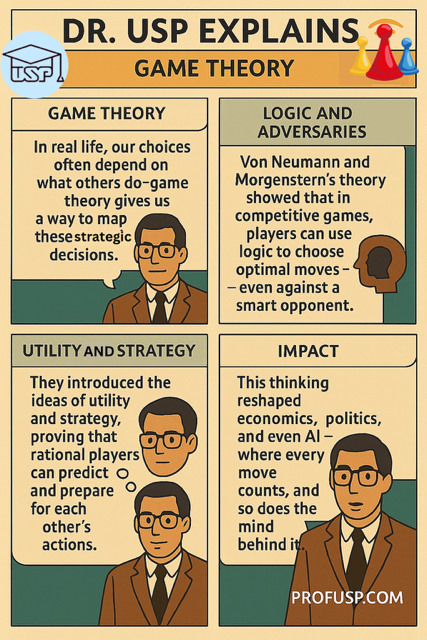
Game Theory
Think through choices whose outcomes depend on what others choose.
Read the study notes
- Describe the players, available actions, information and payoffs before comparing strategies.
- Strategic reasoning asks how each choice interacts with the choices and expectations of other participants.
- Applications include bargaining, cooperation, competition and decisions under strategic uncertainty.
Reading note. Models make assumptions about preferences and information. Their predictions depend on how well those assumptions fit the situation.
Think about it. How would your decision change if the other person could anticipate it?
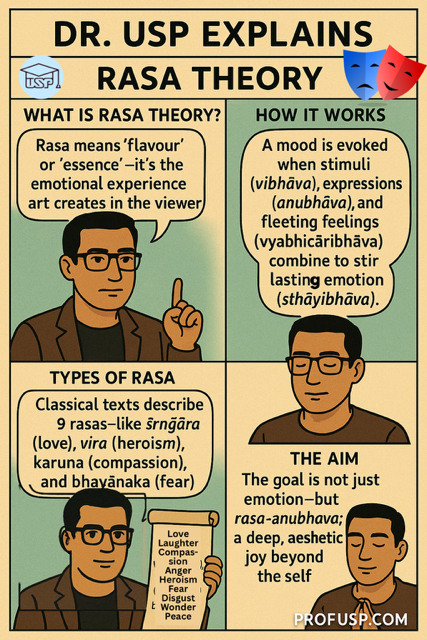
Rasa Theory
Explore how performance and poetry evoke an aesthetic experience.
Read the study notes
- Rasa names the aesthetic relish a responsive audience experiences through an artwork or performance.
- The classical account connects determinants, expressive consequences and transitory states with a durable emotional disposition.
- Study how a performance shapes experience through character, situation, gesture, rhythm and language.
Reading note. Bharata’s foundational account presents eight rasas. Śānta, often listed as the ninth, was developed and debated in later traditions.
Think about it. How can a tragic scene produce aesthetic enjoyment while portraying suffering?
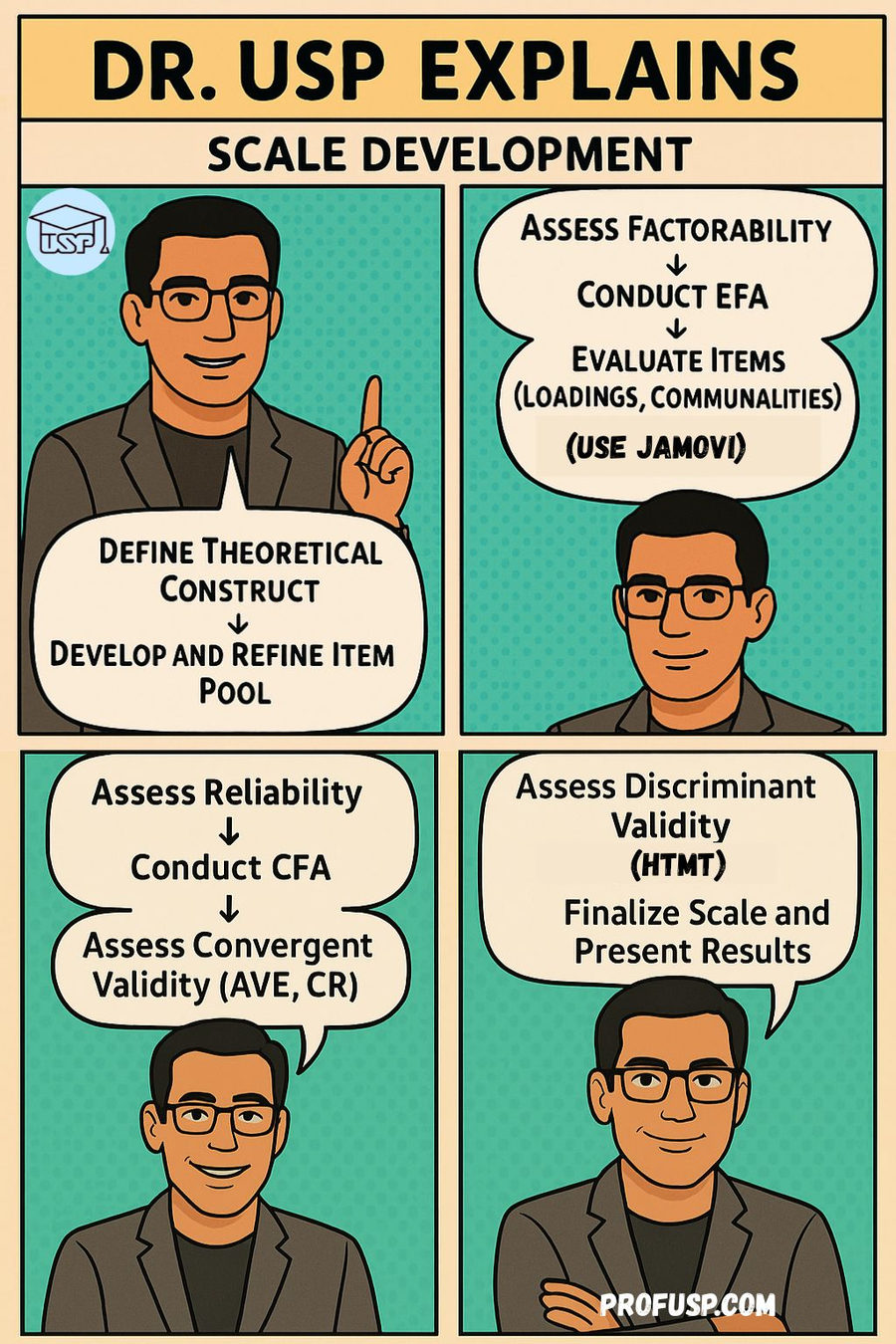
Scale Development
Turn a carefully defined construct into a defensible measurement instrument.
Read the study notes
- Define the construct, develop an item pool and assess content before piloting the instrument.
- Examine items and dimensionality with suitable exploratory methods; test the proposed structure with confirmatory analysis.
- Evaluate reliability and evidence for validity in relation to the intended population and use.
Reading note. Use independent data or a defensible validation strategy for confirmation. AVE, CR and HTMT are tools whose suitability depends on the measurement model.
Think about it. Which part of your construct might a polished questionnaire still fail to measure?
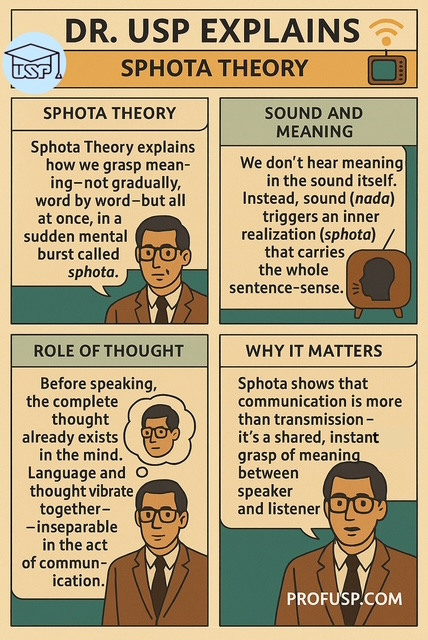
Sphoṭa Theory
Explore how a linguistic expression is understood as a meaningful whole.
Read the study notes
- Sphoṭa theory addresses the relationship between linguistic unity, audible expression and meaning.
- In Bhartṛhari’s account, sentence understanding gives a central place to a whole that analysis divides into parts.
- Use the distinction to examine how hearing successive sounds relates to apprehending an expression’s import.
Reading note. The poster offers a compressed philosophical account. Interpreters differ on how to understand Sphoṭa, language and cognition.
Think about it. When does a sentence become intelligible as a whole rather than a sequence of sounds?
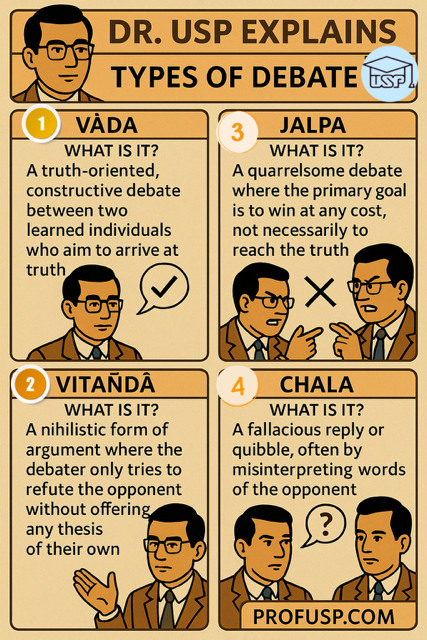
Debate in Nyāya
Distinguish inquiry directed toward truth from disputation directed toward victory.
Read the study notes
- Vāda pursues a reasoned determination of truth; jalpa gives priority to winning a dispute.
- Vitaṇḍā attacks an opponent’s position without defending a positive thesis of its own.
- Chala exploits ambiguity or misrepresents an expression to obstruct an argument.
Reading note. Classical Nyāya distinguishes three debate forms: vāda, jalpa and vitaṇḍā. Chala is a quibble or unfair reply, rather than a fourth parallel form.
Think about it. What would change in a public debate if participants had to state what could change their minds?
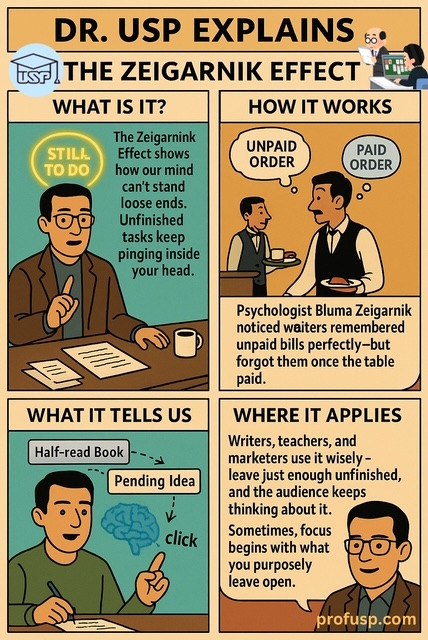
The Zeigarnik Effect
Examine a famous claim about unfinished tasks, memory and returning to work.
Read the study notes
- Zeigarnik’s original experiments reported a recall advantage for interrupted tasks.
- Later evidence varies: a 2025 meta-analysis found no general memory advantage, while the tendency to resume interrupted tasks was more consistent.
- For your own work, record the next concrete step so you can return to a task deliberately.
Reading note. Remembering unfinished tasks and resuming them are different effects. Treat the poster as an introduction to a debated finding.
Think about it. Do unfinished tasks improve your recall, draw you back to work, or simply distract you?